Regions / SLO Coast
SLO Coast
A narrow 60-mile coastal ribbon — among the coolest, most maritime-influenced growing in California.
Explore all 47 SLO Coast tasting rooms on the map →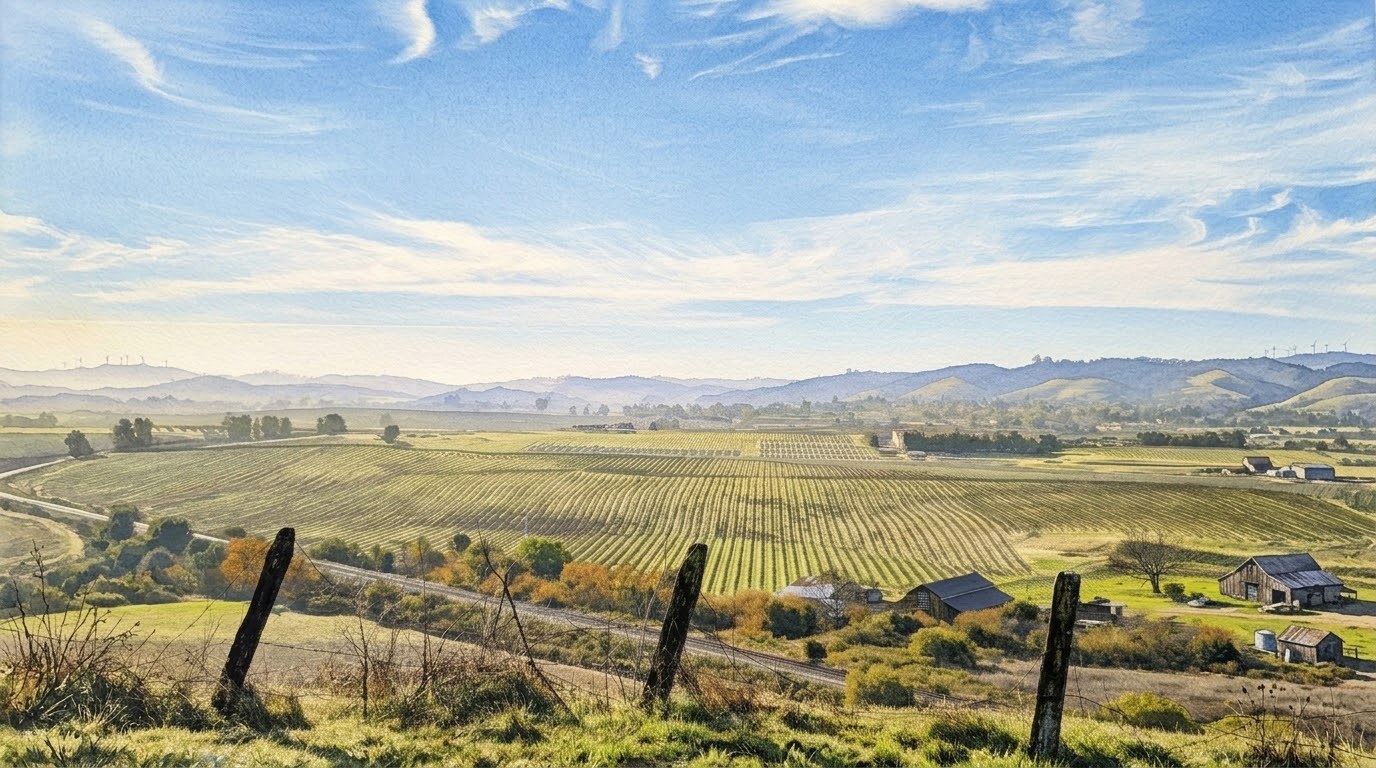
A narrow 60-mile coastal ribbon — among the coolest, most maritime-influenced growing in California.
Explore all 47 SLO Coast tasting rooms on the map →The San Luis Obispo Coast (SLO Coast) AVA, official since 2022, runs 60 miles from San Simeon to Nipomo — a narrow strip where the nearest vines sit a quarter-mile from the Pacific and the farthest just 15 miles inland. It encompasses the long-established Edna Valley and Arroyo Grande Valley AVAs. Chardonnay and Pinot Noir make up over 80% of plantings.
Genuinely cool and maritime, with year-round temperatures between roughly 65-80°F and near-constant coastal influence — fog, wind, and salinity. Edna Valley boasts one of California's longest growing seasons, letting flavors develop slowly over an extended hang time.
Uplifted sedimentary terrain that was once ocean floor: chalk, loam, clay, and dark humus over calcareous subsoils deposited by ancient sea life — often compared to Burgundy's. Northern and central areas draw on the Franciscan Formation, and the soils show notable minerality and salinity.
Edna Valley was established as an AVA in 1982 and Arroyo Grande Valley in 1990, but their unifying SLO Coast appellation only arrived in 2022 — formal recognition of a coastline long prized for intensely aromatic Burgundian wines.
Each sub-appellation has its own soils, elevation, and climate. Tap through to the map filtered to that area.
Cool maritime valley with volcanic and clay-rich, black-humus soils and California’s longest growing season; benchmark Chardonnay, Pinot Noir, and Syrah.
View Edna Valley on the map →A 16-mile northeast-southwest valley on silty and sandy clay loams; cooling Pacific fog and wind for Pinot Noir, Chardonnay, and Rhône varieties.
View Arroyo Grande Valley on the map →